
Menarini’s 70th Art Volume: Beyond Michelangelo’s Genius
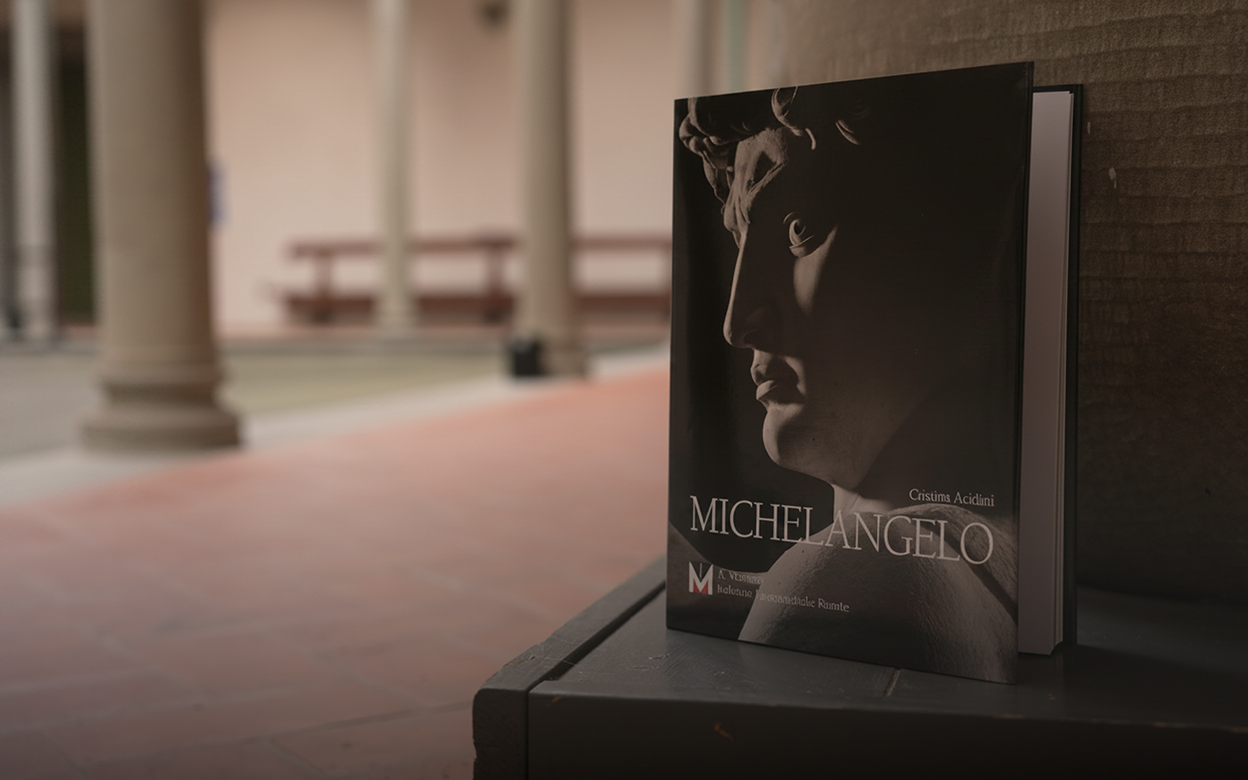
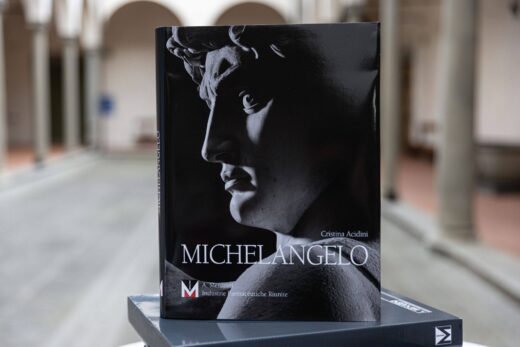
Sculptor, painter, architect and poet, Michelangelo Buonarroti remains one of the most studied, reproduced and celebrated artists in history. Yet despite centuries of scholarship, he continues to surprise us. That enduring ability to inspire wonder lies at the heart of the latest Menarini Art Volume (the seventieth in the historic series launched in 1956) presented in Florence at the prestigious Istituto degli Innocenti.
Rather than simply celebrating Michelangelo’s artistic achievements, this new monograph invites readers to rediscover the man behind the masterpieces. In the pages curated by Cristina Acidini, Michelangelo’s life unfolds as a complex and deeply human story, shaped by contradictions, unresolved tensions and an extraordinary greatness that continues to resonate today.
The launch event brought together some of Italy’s leading cultural figures. Barbara Jatta, Director of the Vatican Museums, introduced the volume, highlighting its rare combination of scholarly rigour and accessibility. She was joined by Menarini’s leadership, including shareholders and Board members Lucia and Alberto Giovanni Aleotti, Chairman Eric Cornut and CEO Elcin Barker Ergun.
“As a pharmaceutical company, our mission has always been to put people at the centre of everything we do. That naturally aligns with the work of those who place humanity at the centre through the lens of beauty,” said Lucia Aleotti, highlighting the company’s longstanding commitment to promoting Italy’s artistic heritage.
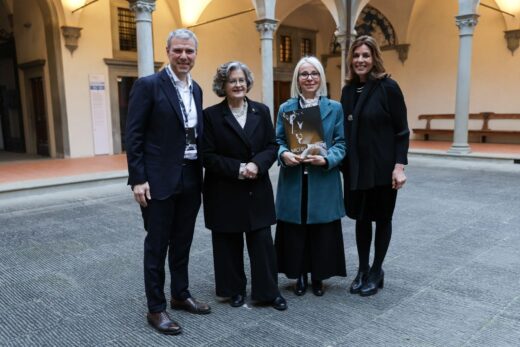
Guiding readers through this journey is Cristina Acidini, one of Italy’s foremost authorities on Renaissance art. Former Superintendent of Florence’s museum system and now President of the Accademia delle Arti del Disegno, Casa Buonarroti and the Roberto Longhi Foundation, Acidini moves beyond stylistic analysis to offer a compelling portrait of Michelangelo in all his complexity.
An extraordinary life
 Michelangelo died in 1564, just short of his ninetieth birthday. It was said at the time that the world had lost not one man, but four. In every discipline he pursued — painting, sculpture, architecture and poetry — he left such an indelible mark that it is almost impossible to imagine the history of art without him.
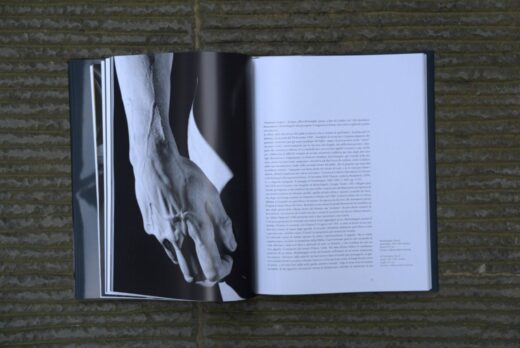
Acidini’s monograph also reveals a more intimate side of the artist: generous towards those less gifted despite his reputation for frugality; capable of dealing with popes and powerful patrons without ever compromising his artistic independence; and tirelessly devoted to his work until the very end, carving marble even as arthritis ravaged his hands. It is this tension between the untouchable genius and the vulnerable human being that makes the volume so compelling.
Michelangelo’s artistic journey began in Florence, amid the vibrant cultural atmosphere of the Medici court. At just fifteen, his Madonna of the Stairs already displayed an astonishing command of marble carving. By the age of seventeen, The Battle of the Centaurs revealed a mastery of movement and composition that artists far older and more experienced would have envied. Both works are housed at Casa Buonarroti, a museum the volume encourages readers to rediscover beyond Florence’s better-known cultural landmarks.
It was in Rome, however, that Michelangelo secured his place among history’s greatest artists. The Pietà in St. Peter’s Basilica — Mary cradling the body of Christ with extraordinary grace, completed before Michelangelo had turned thirty — marked the beginning of an unparalleled career. It was followed by the David, an enduring symbol of human perfection, and by the Sistine Chapel ceiling, a commission many artists would have refused but which Michelangelo transformed into one of the greatest creative achievements in history. Decades later, The Last Judgment, painted on the altar wall as the Counter-Reformation gathered momentum, reflected a profoundly different vision: Christ was no longer the idealised youth of the Pietà, but an uncompromising judge surrounded by bodies caught in a whirlwind of movement.
Painting as sculpture, sculpture as liberation
 Among the volume’s most evocative chapters are those devoted to the Prisoners, the unfinished sculptures originally conceived for the monumental tomb of Pope Julius II. Suspended between raw stone and finished form, they perfectly embody Michelangelo’s concept of sculpture as an art of subtraction: removing what is unnecessary to reveal the figure already contained within the marble. The same artistic vision can be seen in the Doni Tondo, the only panel painting universally attributed to Michelangelo. Its vivid, almost otherworldly colours, twisting figures and powerful chiaroscuro give the painted bodies an unmistakably sculptural presence.
The volume concludes with Michelangelo’s late masterpieces: his architectural work on St. Peter’s Basilica, the Bandini Pietà, and finally the Rondanini Pietà, now housed at Milan’s Castello Sforzesco. Acidini describes the latter as “a prayer carved in stone“, where the beauty of the human body has all but dissolved and the two figures seem to merge into one another. Michelangelo continued working on it until the very last days of his life.
Featuring Aurelio Amendola’s striking black-and-white photographs alongside reproductions of Michelangelo’s frescoes, this Menarini Art Volume is far more than an exhibition catalogue. It is an invitation to slow down, to look more closely, and to allow beauty to fulfil its purpose. Like knowledge, and like care, art is a journey with no final destination.